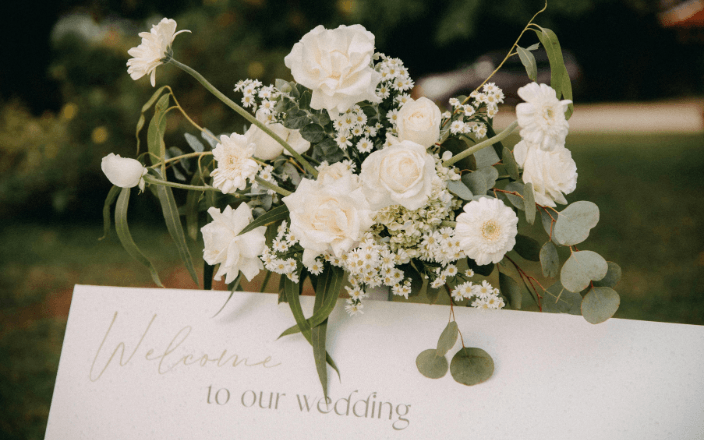
A minimalist wedding registry is a deliberate, curated approach to gifting, and in theory, it should produce better outcomes than a 200-item checklist. In practice, minimalist registries fail at a higher rate than couples anticipate because the mistakes are structural, not cosmetic.
A large registry hides its problems in volume. A minimalist registry exposes every mistake immediately. Leave the under-$50 tier empty on a 200-item list and most guests find something anyway. Leave it empty on a 50-item list and 15-25% of guests go off-list. The smaller the list, the more consequential each decision, and the more damage each mistake creates.
The minimalist paradox: A minimalist registry is more unforgiving than a large one. Every missing price tier, every absent fund option, and every platform limitation has a proportionally larger impact on a 50-item list than on a 200-item one. Minimalism requires more precision, not less.
The 10 Mistakes Minimalist Couples Make: The Complete 2026 Guide
Here are the 10 most common mistakes minimalist couples make on their wedding registry, with the consequence of each mistake and the specific fix:
| # | Mistake | What Goes Wrong | The Fix |
|---|---|---|---|
| 1 | No items under $50 | Budget guests go off-list; unwanted gifts arrive; returns spike | Add 8-12 items priced $15-$50, candles, cookbooks, linens, bar tools |
| 2 | No fund or experience option | Established couples receive products they don’t need; guests have no flexible giving path | Add a honeymoon or home fund at 0% fee on MyRegistry.com |
| 3 | Using a single-store platform | DTC and specialty brands the couple researched can’t be added; list defaults to mass-market substitutes | Switch to a universal registry, MyRegistry.com supports any brand from any site |
| 4 | No items in the $300+ tier | Group gifters have no aspirational target; high-value contributions split awkwardly across small items | Add 4-6 items above $300 specifically designated for group gifting |
| 5 | Closing the registry too early | Late gift-givers and shower guests find an empty list; off-list purchases multiply | Keep the registry active for at least 6 months after the wedding date |
| 6 | No cross-store duplicate tracking | Guests on different platforms buy the same item; couple receives duplicates despite a short list | Use a universal registry with real-time cross-store purchase tracking |
| 7 | Listing only one item per category | If the one item sells out or goes out of stock, the category is empty with no alternative | Add 2-3 options per category at different price points as backups |
| 8 | Ignoring the fund fee | Couple creates a honeymoon fund on a 2.5-3% platform and loses $125-$300 per $5,000-$10,000 contributed | Create all funds on MyRegistry.com at 0%, every dollar contributed arrives |
| 9 | No items for budget under $25 | Coworkers, acquaintances, and casual guests find nothing accessible; they skip the registry entirely | Include 4-6 items under $25, premium candles, small ceramics, tea sets |
| 10 | Building on the wrong platform first | Couple spends weeks adding items to Amazon or Target, then discovers DTC brands aren’t supported | Start on MyRegistry.com, import any existing Amazon/Target list in minutes for free |
2026 mistakes verdict: Mistakes 1, 2, 3, 6, and 8 are the five that cause the most post-event damage. No items under $50 drives off-list purchases. No fund option fills established couples with products they don’t want. Single-store platforms exclude the brands the couple actually researched. No duplicate tracking delivers the same item twice. Wrong fund platform costs $125-$450 in avoidable fees. All five are preventable before the registry goes live.
The 10 Mistakes Explained: What Goes Wrong and Why
Mistake 1: No Items Under $50, The Most Common and Most Damaging
The single most common mistake on a minimalist registry is leaving the under-$50 price tier empty. It happens because couples building intentional lists focus on quality and skip items that feel too small. A premium candle feels trivial next to a Caraway Dutch oven. A linen napkin set feels like a throwaway next to a Vitamix. So both get left off.
The consequence is immediate and measurable. Wedding guest research consistently shows that 30-40% of guests spend under $75 on wedding gifts. On a minimalist registry with nothing under $50, every guest in that group faces a choice between buying something they cannot really afford, going off-list, or not giving a gift at all. The outcome is almost always off-list purchases, items the couple did not want and will likely return.
The $50 floor rule: Every minimalist registry must have items priced under $50. Not as filler, as deliberate choices. A premium soy candle from a DTC brand. A beautiful cookbook. A set of hand-carved wooden spoons. These items cost $20-$45, they are genuinely wanted, and they serve every guest who cannot spend $100.
Mistake 2: No Fund or Experience Option
Minimalist registries are most common among established couples, people who have been living together for years and already own most household basics. These couples often build a short list of genuine upgrades and assume that covers the gifting landscape. It does not.
Without a fund option, guests who want to contribute more than any single item costs have nowhere to go. Family members who planned to give $300-$500 buy two $150 items the couple did not really need. Friends who would have funded a honeymoon dinner split that money across physical gifts that sit unused. A honeymoon fund at 0% on MyRegistry.com captures every contribution that has no natural product destination, and delivers it in full.
Mistake 3: Building on a Single-Store Platform
This is the structural mistake that undermines every other intention a minimalist couple has. They research Parachute sheets for a week. They choose Caraway over All-Clad because they prefer the non-toxic coating. They pick a Farmhouse Pottery serving bowl they saw in a magazine. Then they go to Amazon or Target to build the registry and discover none of those items exist on that platform.
The result is a registry built on compromise, items chosen because the platform carries them, not because the couple wants them. Every DTC brand preference, every specialty retailer choice, every direct-to-consumer item gets replaced by a mass-market substitute. The minimalist philosophy, intentional, specific, quality-driven, is abandoned the moment the couple logs into the wrong platform.
The platform mistake cost: A minimalist couple who builds on Amazon or Target loses access to 70-80% of the brands they researched. The list that results is not curated, it is whatever Amazon or Target stocks in the categories the couple cares about. That is not minimalism. That is limitation.
Mistake 4: No Items in the $300+ Tier
Minimalist couples often avoid high-ticket items because they feel uncomfortable appearing to expect large gifts. The result is a registry that tops out at $200, well-intentioned but structurally broken for any guest who planned to give more.
Parents, close family members, and couple friends who pool contributions represent a significant portion of any wedding guest list. These guests want to give something meaningful and lasting. Without a $300+ item on the registry, they either buy multiple smaller items the couple didn’t prioritize, go significantly off-list, or give cash directly without the satisfying experience of funding something specific.
Mistake 5: Closing the Registry Too Early
Many minimalist couples assume the registry is finished when the wedding is over. They close it within days of returning from the honeymoon. The consequence arrives in the weeks that follow: late gifts from guests who missed the event, shower gifts from people who couldn’t attend, and post-wedding gifts from distant relatives who didn’t know the registry existed until after the fact.
The expert recommendation is consistent: keep the registry active for at least six months after the wedding date. A closed registry sends every late giver off-list. An active registry keeps every guest connected to the couple’s actual preferences.
Mistake 6: No Cross-Store Duplicate Tracking
A 50-item minimalist list might seem immune to duplicate gifts, the logic being that fewer items means fewer opportunities for overlap. The logic is wrong. A couple with 50 items on MyRegistry.com and a separate Amazon list creates exactly the same duplicate risk as a 200-item registry: guests on one platform cannot see purchases made on the other.
One item purchased on Amazon does not appear as purchased on The Knot. A registry on Zola does not know what Target guests have bought. The only protection against duplicates, regardless of list size, is a universal registry platform with real-time cross-store purchase tracking.
Mistakes 7-10: The Operational Mistakes
The remaining four mistakes are operational rather than structural. Listing only one item per category leaves couples exposed when that item sells out — a real risk on a short list. Paying a 2.5-3% fund platform fee costs $125-$450 per $5,000-$15,000 fund for no reason other than platform inertia. Leaving the under-$25 tier empty eliminates casual guests and coworkers who would otherwise give something small and meaningful. Starting on the wrong platform and building for weeks before discovering the DTC limitation is the most avoidable mistake of all, one free import on MyRegistry.com fixes it in under 20 minutes.
The Price Tier Mistake: What Minimalist Registries Are Missing
| Price Tier | Target %of List | Minimalist Mistake | Impact on Guests | The Fix |
|---|---|---|---|---|
| Under $25 | 10% | Tier completely missing | Coworkers and acquaintances skip the registry entirely | 4-6 items: candles, ceramics, tea, small bar tools |
| $25-$75 | 25% | Only 1-2 items in this range | Most common gifting budget is unserved; guests go off-list | 12-15 items: barware, linens, books, kitchen tools |
| $75-$150 | 30% | Items present but limited | Fulfillment risk if 1-2 items sell out with no backup | Ensure 2-3 options per subcategory at this tier |
| $150-$300 | 20% | Usually well-represented | Strong tier on minimalist registries, no common mistake | Maintain; keep 2 options per major category |
| $300+ | 15% | No group-gift targets added | Group gifters have no aspirational item to pool toward | 4-6 items: stand mixer, Dutch oven set, art piece |
2026 price tier verdict: The under-$25 and $25-$75 tiers are the two most consistently missing on minimalist registries. Together they represent 35% of the ideal distribution, and 30-40% of the actual wedding guest population. A minimalist registry that covers these tiers fully while keeping the total list at 50-60 items is not a compromise. It is a properly executed minimalist strategy.
The Platform Mistake: What Each Registry Platform Can and Cannot Do
★ MyRegistry.com highlighted in gold, the only platform that prevents all platform-dependent mistakes
| What Minimalist Couples Need | MyRegistry.com | Amazon | Target | The Knot/ Zola | Why It Matters forMinimalist Registries |
|---|---|---|---|---|---|
| Any DTC or specialty brand | ✅ Any site | ❌ No | ❌ No | ❌ No | Minimalist couples choose specific brands — not whatever one store stocks |
| 0% fund fee | ✅ 0% | ❌ N/A | ❌ N/A | ❌ 2.5% | Established couples rely on funds; 2.5% on $10K = $250 lost |
| Cross-store duplicate tracking | ✅ Real-time | ❌ Store only | ❌ Store only | ⚠️ Partial | Short lists hurt more from duplicates — every wasted gift is proportionally larger |
| Group gifting on any item | ✅ Yes | ❌ No | ❌ No | ✅ Yes | $300+ targets need group gifting; minimalist lists have fewer items to pool toward |
| Free import of existing registries | ✅ Free | ❌ No | ❌ No | ❌ No | Couples who started wrong platform can consolidate without losing any items |
| One link for all guests | ✅ Always | ❌ Store only | ❌ Store only | ✅ Yes | Short lists need every guest to see the same list — splitting links fragments already-thin inventory |
| Items stay visible when purchased | ✅ Yes | ✅ Yes | ✅ Yes | ✅ Yes | All platforms show purchased items — no mistake here |
| Price filter for guest browsing | ✅ Yes | ✅ Yes | ✅ Yes | ✅ Yes | Price filtering helps budget guests navigate short lists faster |
2026 platform verdict: The three mistakes that require a specific platform to prevent, DTC brand access, 0% fund fee, and cross-store duplicate tracking, are all solved exclusively by MyRegistry.com. No other platform in this comparison eliminates all three simultaneously. Babylist solves two of the three (DTC access and cross-store tracking) but charges a 3% fund fee. The Knot and Zola solve one (basic multi-store access) but charge 2.5% and cannot access most DTC brands.
The Fund Fee Mistake: What Choosing the Wrong Platform Costs
Mistake 8, paying a fund platform fee, is the most financially impactful mistake a minimalist couple makes. Here is the exact cost at every fund size across all major platforms:
| Fund Size | MyRegistry.com (0%) | The Knot(2.5%) | Zola(2.5%) | Babylist(3%) | Honeyfund(2.8%) | Cost ofMistake |
|---|---|---|---|---|---|---|
| $2,000 | $2,000 | $1,950 | $1,950 | $1,940 | $1,944 | -$50 to -$60 |
| $5,000 | $5,000 | $4,875 | $4,875 | $4,850 | $4,860 | -$125 to -$150 |
| $8,000 | $8,000 | $7,800 | $7,800 | $7,760 | $7,776 | -$200 to -$240 |
| $10,000 | $10,000 | $9,750 | $9,750 | $9,700 | $9,720 | -$250 to -$300 |
| $12,000 | $12,000 | $11,700 | $11,700 | $11,640 | $11,664 | -$300 to -$360 |
| $15,000 | $15,000 | $14,625 | $14,625 | $14,550 | $14,580 | -$375 to -$450 |
2026 fund fee verdict: The cost of the fund fee mistake compounds with fund size. At $5,000 it costs $125-$150. At $10,000 it costs $250-$300. At $15,000 it costs $375-$450. These are not rounding errors, they are real honeymoon experiences, real home contributions, and real savings that belong to the couple, not the platform. MyRegistry.com at 0% is the only correct choice for any minimalist couple who plans to include a fund.
Mistake Severity & Frequency: How to Prioritize the Fixes
Not all mistakes are equally urgent. Here is each mistake ranked by how often it occurs and how much damage it causes:
| Mistake | How Common | Severity | Consequence | Platform That Prevents It |
|---|---|---|---|---|
| No items under $50 | Very common | High | 15-25% of guests go off-list or skip gifting | Any platform, add affordable items regardless of where you register |
| No fund option | Common | High | Established couples receive unwanted products | MyRegistry.com, 0% fund fee; The Knot/Zola at 2.5% |
| Single-store platform | Very common | Critical | DTC brands unavailable; list defaults to compromise | MyRegistry.com, the only fix for this mistake |
| No $300+ group gift targets | Common | Medium | Group gifters contribute awkwardly or go off-list | MyRegistry.com + Babylist, both support group gifting |
| Closing registry too early | Uncommon | Medium | Late and post-wedding gifts become off-list | All platforms, just keep it open 6 months post-event |
| No cross-store dupe tracking | Very common | High | Duplicates arrive despite short list | MyRegistry.com or Babylist, real-time cross-store tracking |
| Only one item per category | Common | Medium | Stockouts leave categories empty with no backup | Any platform, add 2-3 options per category |
| Wrong fund platform (fee paid) | Very common | High | $125-$450 lost per registry on avoidable platform fee | MyRegistry.com, 0% is the only acceptable rate for fund registries |
| No items under $25 | Common | Medium | Casual guests and coworkers skip the registry | Any platform, add accessible entry-point items |
| Started on wrong platform | Common | High | DTC brands missing; weeks of work potentially lost | MyRegistry.com, free import rescues any existing list |
2026 severity verdict: The three ‘Critical’ or ‘High + Very Common’ mistakes, single-store platform, no items under $50, and wrong fund platform fee, should be fixed before the registry is shared with any guest. They are the most common, the most damaging, and the most easily prevented. The three ‘Medium’ mistakes, no $300+ targets, early closure, single item per category, should be addressed in the first review of the registry before save-the-dates go out.
When a Minimalist Registry Works and When It Creates Problems
| ✅ When a Minimalist Registry Works Perfectly | ⚠️ When the Minimalist Approach Creates Problems |
|---|---|
| Every price tier is covered — from $20 candles to $400 stand mixers | No items under $50 — budget guests have nowhere to go and go off-list instead |
| A honeymoon or home fund fills the gap where products aren’t needed | No fund option — established couples receive duplicate kitchen items they don’t want |
| Built on a universal platform that holds specialty and DTC brands | Built on Amazon or Target — brands researched can’t be added; list becomes a compromise |
| 2-3 items per category as backup options if the hero item sells out | One item per category — a single stockout leaves that category completely empty |
| $300+ items included as group gift targets for family and close friends | Nothing above $200 — group gifters contribute awkwardly or choose expensive off-list gifts |
| Registry stays active for 6 months after the wedding | Registry closed within weeks of the event — late givers and shower guests find nothing |
| Real-time cross-store tracking prevents duplicates on a short list | No duplicate tracking — a 50-item list still produces duplicate gifts without it |
| Fund fee is 0% — every contribution reaches the couple in full | Fund on a 2.5-3% platform — $250-$450 in contributions lost on a $10,000-$15,000 fund |
2026 pros & cons verdict: A minimalist registry works perfectly when every price tier is covered, a fund option exists at 0% fee, the platform supports DTC brands, and duplicate tracking is active. It creates problems when any of those four conditions are missing. The format itself is sound, the execution is where minimalist registries fail.
The Minimalist Registry Mistake-Prevention Checklist for 2026
Here is the complete checklist to prevent every mistake before the registry goes live:
| ✓ | Checklist Item | Why It Prevents a Mistake | Platform Required |
|---|---|---|---|
| ✓ | At least 6 items under $30 | Prevents budget guests from going off-list entirely | Any platform |
| ✓ | At least 12 items between $30-$75 | Serves the most common wedding gift spending range | Any platform |
| ✓ | 2-3 options per major category | Ensures a backup if the hero item sells out or goes out of stock | Any platform |
| ✓ | At least 4 items above $300 | Gives group gifters an aspirational target to pool toward | MyRegistry.com or Babylist |
| ✓ | One fund option at 0% fee | Covers the gap for established couples; preserves every dollar given | MyRegistry.com only |
| ✓ | All DTC / specialty brands included | Ensures the list reflects deliberate brand choices, not substitutes | MyRegistry.com, universal registry required |
| ✓ | Real-time cross-store duplicate tracking | Prevents duplicate gifts even on a short 40-60 item list | MyRegistry.com or Babylist |
| ✓ | One shareable link for all guests | Short lists need maximum guest reach — one link serves all | MyRegistry.com or Babylist |
| ✓ | Registry stays open 6 months post-event | Late givers and shower guests always find an active list | Any platform, just don’t close it |
| ✓ | Group gifting enabled on $300+ items | Signals to guests that high-value items are poolable, not off-limits | MyRegistry.com or Babylist |
2026 checklist verdict: A minimalist registry that passes all 10 checklist items produces better gifting outcomes than a 200-item traditional registry on every metric: higher fulfillment rate, lower duplicate rate, higher average gift value, and fewer post-event returns. The checklist is not a compromise of minimalist principles, it is what minimalism looks like when it is done correctly.