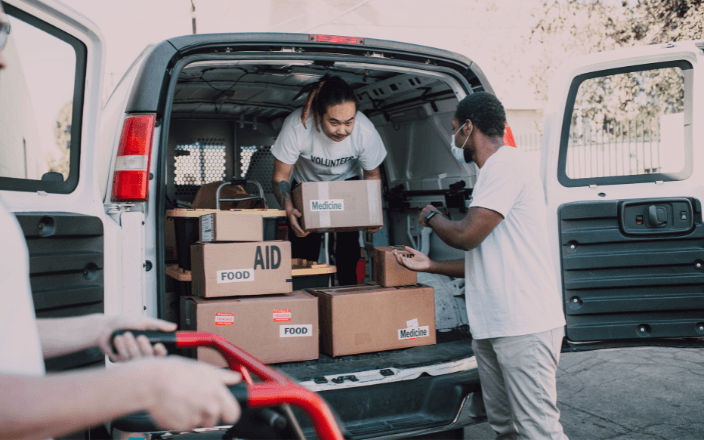
| Quick answer: Food banks most need shelf-stable proteins (canned tuna, chicken, beans, peanut butter), whole grains (rice, pasta, cereal), canned vegetables, and baby essentials like formula and diapers — all unexpired and in original packaging. They generally can’t use perishables, home-cooked food, or anything past its date. Cash also stretches further than groceries because food banks buy wholesale. A MyRegistry giving list lets a pantry collect specific items and cash on one link. |
Food drives are generous, but a lot of what gets donated can’t be used, dented cans, expired boxes, or random items that don’t add up to a meal. A clear giving list turns goodwill into balanced, usable nutrition. Here’s what food banks consistently need most, what to skip, and why pairing food with cash makes every donation go further.
The items below link to real products as examples. A MyRegistry giving list lets a pantry specify exactly these items from any store, track quantities, and add a cash gift fund, all on one branded link.
Shelf-Stable Proteins (Top Priority)
Protein is the hardest category for families to afford and the most valuable to a balanced food box.
Canned tuna, chicken & beans — affordable, shelf-stable protein; the top need.
Peanut butter — kid-friendly protein with a long shelf life.
| Make protein the top of your list — start on MyRegistry for Nonprofits . |
Whole Grains & Staples
Rice (bags) — a versatile staple that stretches meals.
Pasta — inexpensive, long-lasting, and family-friendly.
Low-sugar cereal — breakfast coverage that families consistently need.
Canned vegetables — rounds out balanced meals; low-sodium when possible.
Baby & Family Essentials
Family pantries serve all ages, and these items are expensive and chronically short.
Infant formula — a critical, costly need for families with babies.
Diapers (range of sizes) — rarely covered by food assistance, always in demand.
What Food Banks Can’t Use
Skip perishables, home-cooked or homemade food, opened packages, and anything expired, health rules prevent their use. When in doubt, a giving list keeps donors focused on what’s genuinely needed.
Why Cash Belongs on the List Too
Because food banks buy wholesale, a cash gift often delivers several times the groceries the same money would buy at retail. The best giving list pairs specific food items — for donors who like giving tangible goods — with a cash gift fund for maximum reach.
| Give | What it buys | Best for |
|---|---|---|
| A bag of groceries | Face-value food | Donors who like tangible giving |
| The same amount as cash | Often multiples, via wholesale | Maximum impact |
| Both, on one list | Items + cash fund | Reaching every donor |
| ★ Expert recommendation: Lead your list with shelf-stable proteins and baby essentials — the highest-value, hardest-to-afford items — then add grains and a cash gift fund. Note your ‘cannot accept’ list so drives stay on-target. |
Build your pantry’s giving list, with items and a cash fund on one link, at MyRegistry for Nonprofits.